May 2021
Beth plays with her fingers while I fold laundry on our bed. Tiny socks and onesies form a neat line on my blue sheets. Jane has glued herself to her sister’s side and is singing a song, making it up along the way, kissing Beth’s toes in between stanzas about monkeys on a camping trip. I hear Adam in the kitchen, his hands slapping meat, building the burger patties while he talks to his parents on another video call. Jane asked me when she could go back to daycare.
“As soon as it’s safer,” I reply, passing a burp cloth to her. She likes to fold it into little squares. We have yet to tell her about Beth’s heart. We’ve been waiting for answers, protecting Jane until then—protecting ourselves, too.
“And how’s Caroline,” I hear his mother ask.
“How is Caroline,” I ask my reflection, cocking my head to one side as I study the woman in the mirror. I stick my tongue out in reply.
“She’s good,” Adam says, blocking and tackling the rest of the questions, distracting her with stories from our trip to the park.
Jane perks up and climbs off the bed, ready to sing her song to her grandparents. Beth protests her sister’s sudden departure until I tickle her arm with the corner of a soft blanket.
“I’m good,” I tell my reflection, practicing the words for tomorrow’s calls. My first day back at work. Lucky to still be remote and with Adam taking the rest of his paternity leave next. Life will be uninterrupted in that regard. I glance at the phone and log back into Lurie’s portal to reread the itinerary for Beth’s appointment, peppered with echocardiograms, ultrasounds and weigh-ins, and more questions addressed by if/then scenarios. Needles and tubes later. Scalpels and clamps bury themselves in my mind, and I feel the cuts before I shove the images away and kiss Beth’s forehead.
“They say hello,” Adam calls out from the hallway.
“Hello back,” I chirp back at him.
“Do you have meat hands?”
I hear the water from the kitchen sink and smile. Adam shuffles his feet into our room, Frankensteins his arms before him and waves his hands. Jane follows, laughing.
“Oog! Argh!” The monsters attack me with kisses and tickles, Jane’s little fingers poking at me. I dangle a clean burp cloth above Beth’s tummy. She chortles and kicks her feet at the fabric.
“Can you take Beth for a minute,” I ask Adam.
“Come on, Squeakers, let’s check on Mama Bird.”
“Yeah! Let’s see if she has any babies yet,” Jane trots ahead of them.
“Don’t touch her,” I say, leaning on the doorframe. Adam pats my butt on his way past me. The alarm on my phone rings. Time to pump again.
“Giddyap,” I tell myself and imagine myself trotting to my machine.
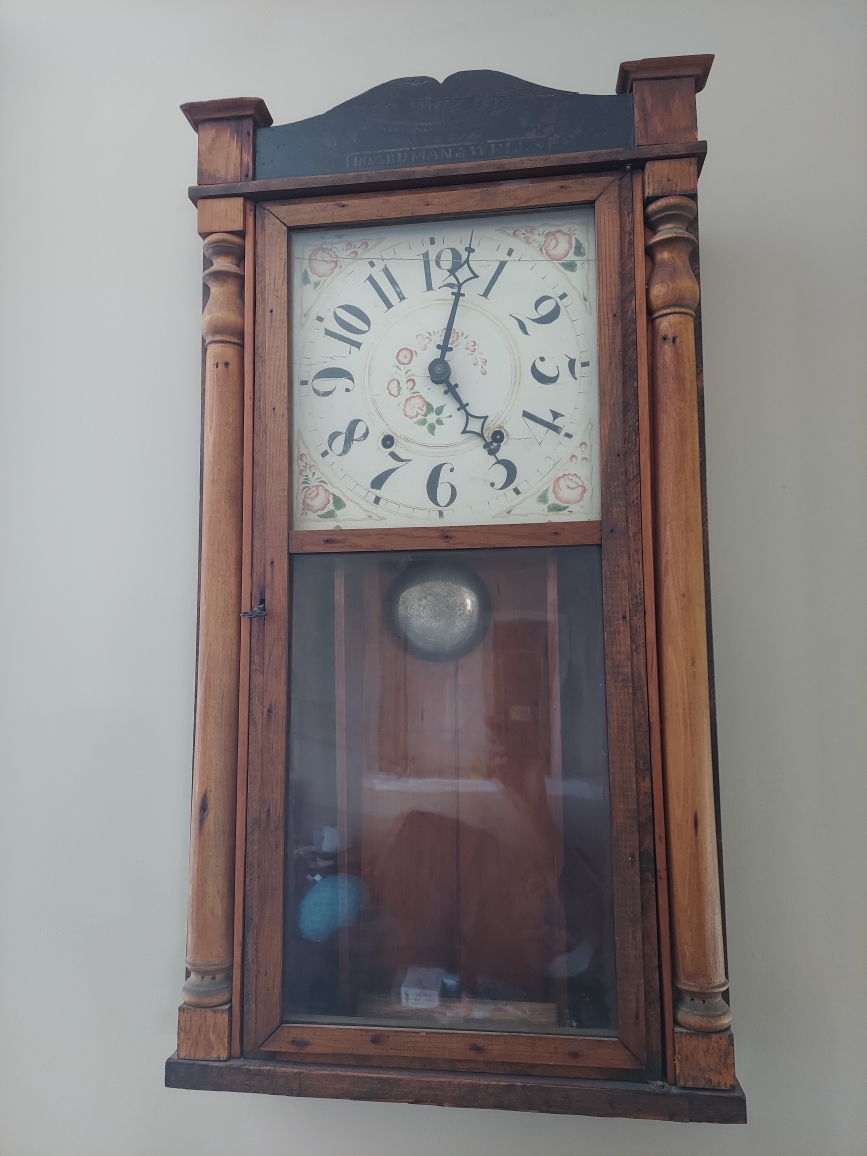
My grandfather had a collection of clocks. They lined the bookcases and walls of his house. Gentle sounds of bells, cuckoos, and a rhythmic tick tock followed you from room to room. An old grandfather clock greeted all who entered through the front door. The brass doorknob had to be jostled up and to the left, down, and to the right to open and come in. The brass was polished smooth by decades of hands turning it. His voice welcomed you in, the words pulled slowly out of him like caramel. “Come in,” and “Yeah.” Amarillo, Texas dripped from his tongue like honey, soft and low, with a slight rumble and a chuckle always on the precipice of eruption. He laughed like a volcano.
We ate peanut butter popsicles together for dessert, in the family room. Took a spoon and stuck it in a jar, sitting on a brown recliner with his long legs propped up, and savored every lick. He took in every word you said with a nod as your legs dangled from the couch and the roof of your mouth turned sticky. There was never a need to move fast with him. Once in the war he was on a ship that cracked in half and sunk. He lived to exist in every moment and understood the importance of them. Never rushed you or broke your heart until he died.
He had to bend his body in half to lean down and pull you into a hug. His toes were longer than my hands, and his smile was larger than my head. He was so tall that I believed he was a giant who came down from the mountains, but his eyes twinkled with humor, and you just knew that he would never eat you for breakfast. Putty in his grandchildren’s hands.
Once, he took a leaf from a graft of Newton’s apple tree and preserved it for us to forget in our young adulthood. I found it on a bookshelf at my father’s house in my early forties, just when I needed to remember him. I think of him a lot lately. His voice soothes me, and the memory of him wets my eyes as I sing Beth to sleep. We are not alone in the dark.
Each of us has them now. His clocks were parceled out to his children and grandchildren when Mimi moved out of the house years after his passing. His bits of history. Some of them gently cuckoo their way through the days. Others are silent. We study our faces in them and watch as our lives move forward.
I pass by one of his clocks hanging on my wall and brush the wood with my fingers. “Hey, old man.” The clock tick-tocks in reply, but I hear him in there.
It’s when I’m sitting down, pumping away, that I notice the message from Henry.
“There you are,” I think, “Right on time.”
“How are you,” he asks me.
I shiver and bite my lip.
 A Story For Us To Remember When We Are Old. © Laura Coughlin 2023
Leave a comment